
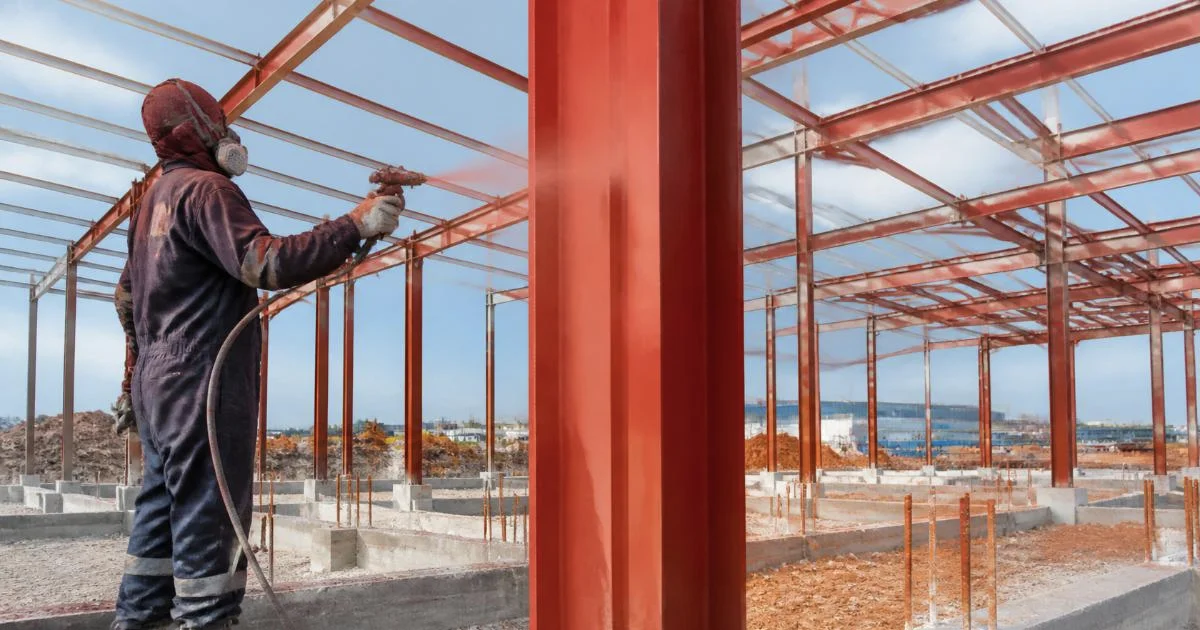
Steel structures such as factory sheds, warehouses, pre-engineered buildings and staircases are strong and quick to build, but rust is their biggest enemy. Corrosion weakens members, stains walls and leads to costly repairs. The right surface preparation and paint system, applied and checked properly, protects the steel for many years.
1. Why steel corrodes
Steel rusts when moisture and oxygen reach its surface. Coastal air, industrial fumes, chemicals, condensation inside sheds and water standing on flanges all speed it up. Paint works as a barrier, and some primers also protect the steel chemically.
2. Surface preparation comes first
Most paint failures start with poor preparation. Paint applied over rust, mill scale, oil or dust soon peels off.
- Remove oil and grease with suitable solvent cleaning
- Remove rust and mill scale by abrasive blast cleaning where possible; for small areas, power tool or hand tool cleaning is used
- The cleanliness grade is specified using recognised standards, such as the ISO 8501-1 visual grades
- Apply primer soon after cleaning, before fresh rust forms
- Avoid painting when the steel surface is damp, during rain or in high humidity
3. A typical paint system
- Primer: provides adhesion and corrosion protection; zinc-rich and epoxy primers are common for industrial steel
- Intermediate coat: builds film thickness and barrier protection
- Topcoat: resists weather and sunlight and gives the final colour; polyurethane topcoats are common for exposed steel
The paint supplier’s data sheet gives the recommended dry film thickness for each coat, overcoat times and compatible products. Do not mix products from different systems without checking compatibility.
4. Quality checks
- Inspect surface cleanliness before priming
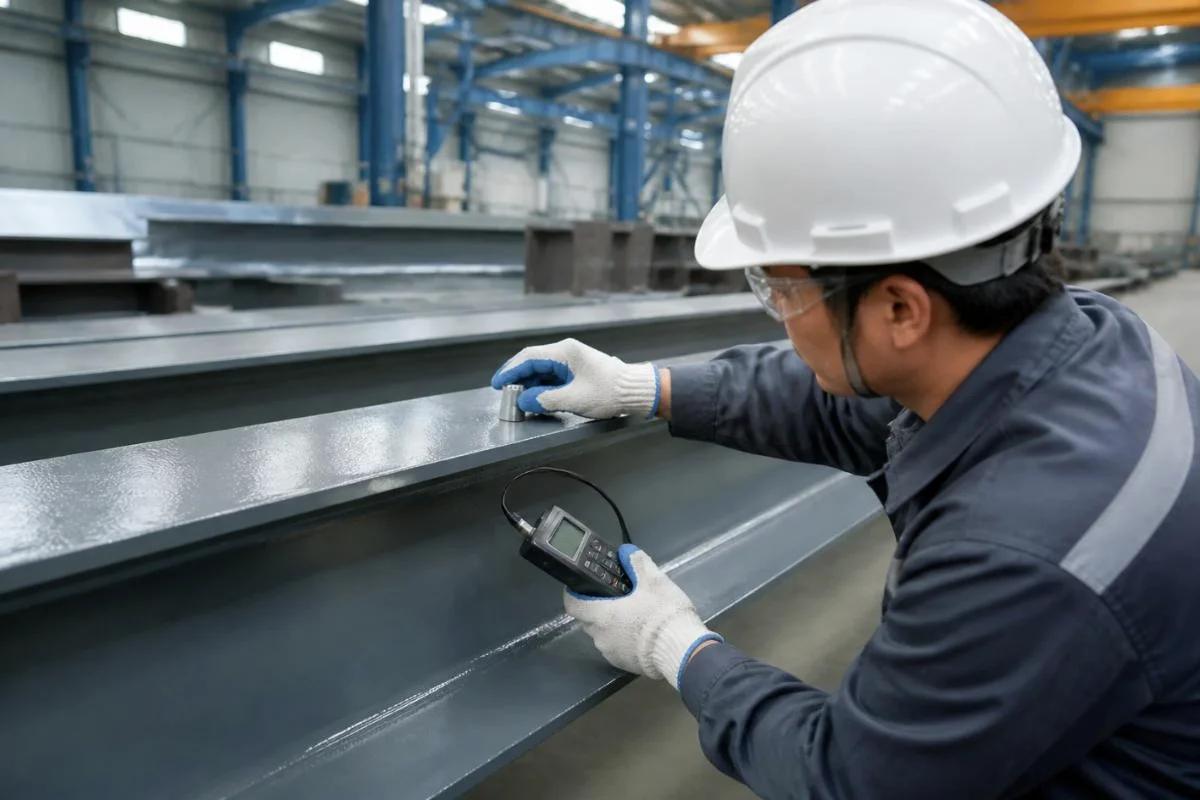
- Measure dry film thickness with a coating thickness gauge at several points on each member
- Check for runs, pinholes, dry spray and missed areas, especially at welds, edges and bolts
- Record batch numbers, weather conditions and test readings
- Touch up damage after erection, including at bolt holes and site welds
5. Galvanizing and other options
Hot-dip galvanizing coats steel with zinc and is widely used for purlins, solar mounting structures and outdoor members. In aggressive environments, galvanizing plus paint gives longer protection. Fire-resistive coatings may also be required on structural steel in some buildings, as specified by the designer and local fire rules.
6. Maintenance
- Inspect painted steel every year, focusing on joints, base plates and areas where water collects
- Clean and touch up small rust spots early, before they spread
- Keep gutters and roof drains clear to avoid leaks onto steel members
- Plan a full repaint when coatings show widespread chalking, cracking or rust
See our guides on pre-engineered buildings vs RCC, structural audits and construction site safety. For sheds and warehouses, read the industrial shed planning guide, and for rooftop structures, the solar mounting structures guide.
Frequently asked questions
Can I paint directly over rust?
Not for lasting protection. Loose rust and scale must be removed; special surface-tolerant products exist for limited cases, but preparation still matters.
How often should a steel shed be repainted?
It depends on the paint system, environment and maintenance. Regular inspections and touch-ups extend the time before a full repaint is needed.
Is galvanized steel maintenance-free?
No, but it lasts much longer than bare steel. Damaged areas and cut edges should be touched up with zinc-rich paint.
Planning a steel structure or repainting an existing shed? Contact ATTPL HOLDCO or visit ATTPL Infra.
Sources
This article is general information, not professional advice. Follow the specification of your structural engineer and coating manufacturer.