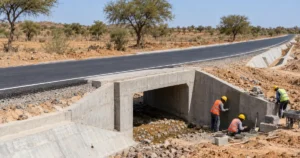

Every new road project faces an early decision: build a flexible (bituminous) pavement or a rigid (concrete) pavement? Both are proven. The right choice depends on traffic, soil, drainage, budget and how the road will be maintained.
How they work
A flexible pavement spreads loads through layers — subgrade, granular sub-base, base and bituminous courses. A rigid pavement uses a concrete slab that carries load by bending and spreads it over a wide area.
Cost
Flexible pavements usually cost less to build. Rigid pavements cost more initially but often need less routine maintenance over their life, so life-cycle cost can be comparable or lower for heavy-traffic roads.
Construction and opening to traffic
Bituminous roads can be opened to traffic soon after laying. Concrete needs curing time before traffic, which affects project schedules and diversions.
Performance and maintenance
- Flexible: needs periodic overlays and pothole repair; sensitive to water
- Rigid: resists heavy loads and oil spills; joints need care; repairs are slower
Where each fits
- Flexible: most highways and rural roads, staged construction, tight budgets
- Rigid: heavy-traffic corridors, industrial areas, bus depots, areas with poor drainage or frequent waterlogging
Decide with data
Traffic studies, soil tests and a life-cycle cost comparison should drive the decision, following the applicable IRC guidelines.
Work with ATTPL Infra
See our projects or contact us. Read how to choose a road contractor. For aggregates and stone, see ATTPL Mining, and for project funding, ATTPL Finance.