Infrastructure sites — roads, buildings, substations and transmission lines — bring together heavy machinery, deep excavations, work at height and live electricity. Every worker should go home safely at the end of the day, and that only happens when safety is planned, not left to chance. This checklist covers the basics every contractor and site manager should put in place.
1. Plan safety before work starts
Each project should have a written safety plan that identifies the main hazards and how they will be controlled. Assign a responsible safety person on site, keep emergency phone numbers displayed and know the route to the nearest hospital.
- Identify high-risk activities: excavation, lifting, work at height, hot work and electrical work.
- Make sure workers are trained for the tasks they perform.
- Keep a first-aid box and a trained first-aider available on every shift.
2. Personal protective equipment (PPE)
Helmets, safety shoes, high-visibility vests and gloves are the minimum on most sites. Add eye protection for cutting and grinding, ear protection near noisy machines and full-body harnesses for work at height. PPE must fit, be in good condition and actually be worn — supervisors should check this at the start of each shift.
3. Work at height
Falls are among the most serious hazards on construction sites. Use guardrails on edges and openings, secure ladders properly and erect scaffolding on firm ground with inspection before use. Workers on towers and structures must stay tied off with harnesses connected to secure anchor points.
4. Excavation and trenches
Trenches for foundations, drains and cables can collapse without warning. Shore or slope deep excavations, keep spoil and machines away from the edge, barricade open trenches and provide safe ladders for entry and exit. Check for underground cables and pipelines before digging.
5. Machinery and vehicles
- Only trained and authorised operators should run excavators, rollers, cranes and pavers.
- Inspect machines daily for brakes, horns, reverse alarms and hydraulic leaks.
- Keep workers out of the swing radius and blind spots, and use a banksman when reversing.
- For lifting, check the load, slings and crane capacity, and never stand under a suspended load.
6. Electrical safety
Temporary site power must have proper distribution boards, earthing and earth-leakage protection. Keep cables off the ground and away from water. On power and transmission line works, follow permit-to-work and isolation procedures, and never assume a line is dead until it has been tested and earthed.
7. Daily toolbox talks and reporting
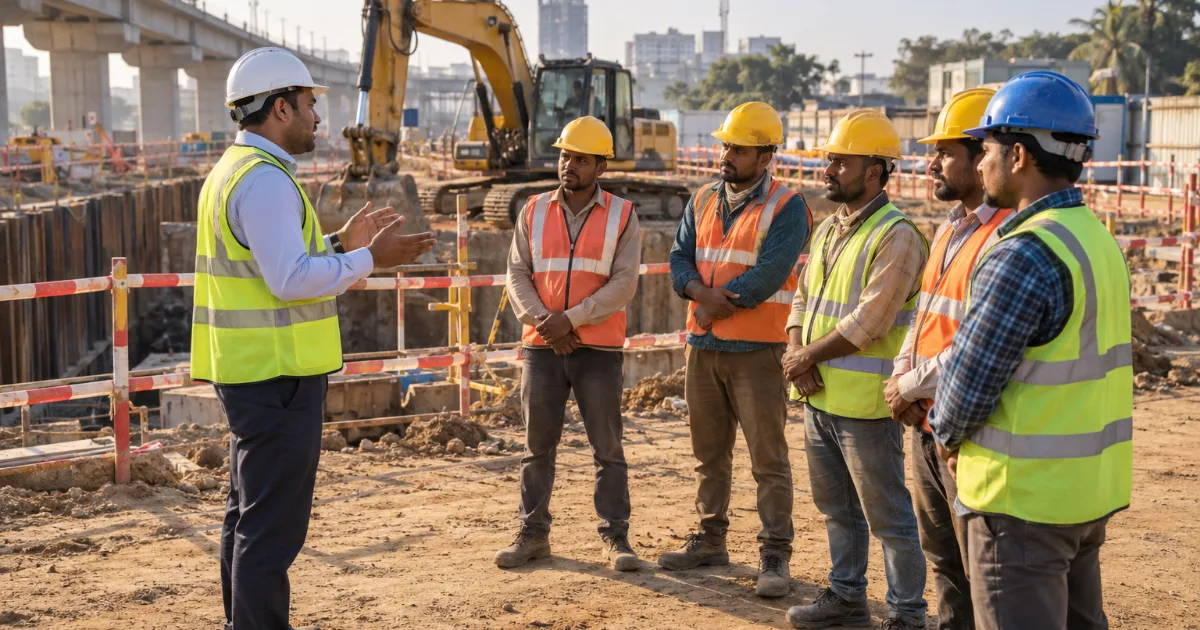
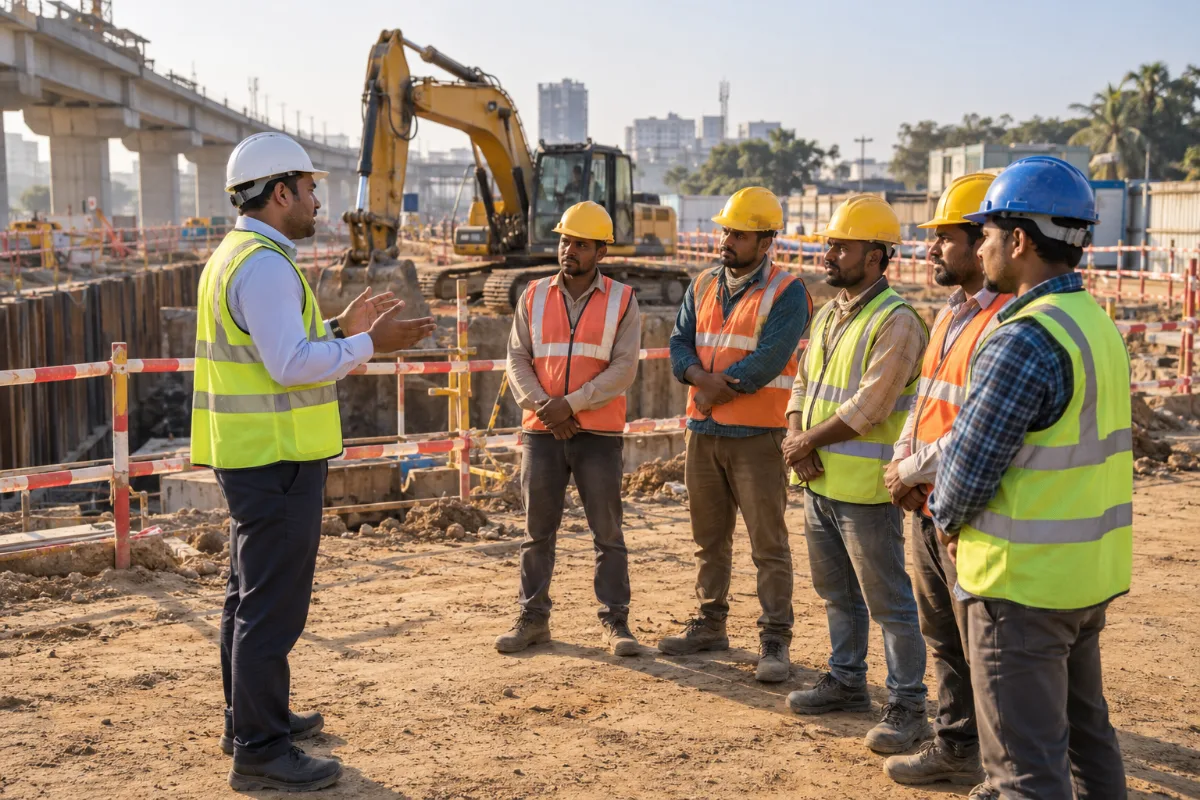
A short toolbox talk at the start of each shift explains the day’s work, the hazards and the controls. Encourage workers to report near misses without fear; each report is a chance to fix a problem before someone gets hurt. Review incidents and near misses every week and act on the findings.
Safety applies to every type of project we handle, from transmission line construction to road construction with heavy machinery. Learn more about ATTPL Infra.
Rooftop and ground-mounted solar plants have their own safety needs for work at height and DC electricity; see how ATTPL Solar’s EPC services plan installation work.
8. Health, welfare and housekeeping
Safety is not only about accidents. Workers need clean drinking water, shade and rest breaks, especially during Rajasthan’s hot summers when heat stress is a real risk. Provide toilets, a clean place to eat and, on larger sites, a first-aid room. Good housekeeping — clearing debris, stacking materials neatly and keeping walkways free — prevents trips, falls and fire hazards. Store fuel, gas cylinders and chemicals safely, with fire extinguishers nearby and staff trained to use them.
Finally, involve subcontractors in the same safety rules. Everyone on site, including drivers and visitors, should get a short induction before entering work areas.
Frequently asked questions
What is the minimum PPE on a construction site?
Most sites require a helmet, safety shoes, a high-visibility vest and gloves as a minimum. Additional PPE depends on the task, such as harnesses for work at height or eye protection for cutting.
What is a toolbox talk?
A toolbox talk is a short safety briefing, usually at the start of a shift, that explains the day’s tasks, the hazards involved and how to control them.
Why should near misses be reported?
Near misses show where an accident could happen. Reporting and fixing them prevents injuries before they occur.
Need a safety-focused contractor for your next project? Contact ATTPL Infra.